The Future of Mixed‑Traffic Mobility
Ensuring Safety Through Unified, Real‑Time Road Intelligence Using Torque Wind Turbine Infrastructure
Abstract
The rapid evolution of autonomous vehicles,
robotic delivery vehicles, and advanced driver‑assistance technologies is
transforming global mobility. Yet for decades to come, human‑operated vehicles
will continue to share the road with increasingly automated systems. This
coexistence creates a complex safety challenge: every road user—human or
machine—must receive accurate, synchronized, location‑specific information
about hazards, traffic conditions, and road‑operator instructions. Without
unified communication, even the most advanced vehicles can make unsafe
decisions.
This paper explores how a new class of multifunctional infrastructure, built
around the Torque wind turbine tower, can serve as a distributed, energy‑self‑sufficient
platform for sensing, communication, and real‑time road management.
1. Introduction
Mobility is entering a hybrid era. Autonomous cars navigate highways with sophisticated sensors and AI decision‑making. Robot vehicles deliver goods. Human drivers continue to operate traditional vehicles, often with limited situational awareness.
This mixed‑traffic environment introduces a
fundamental safety problem:
Vehicles with different capabilities, reaction times, and information
sources must coordinate in real time.
Today’s road infrastructure—static signs, intermittent sensors, and fragmented communication systems—cannot meet this requirement. A new approach is needed: one that merges renewable energy generation with high‑bandwidth communication, environmental sensing, and digital signaling.
2. The Safety Challenge in Mixed‑Traffic Mobility
2.1 Divergent Perception and Reaction Capabilities
- Autonomous vehicles rely on lidar, radar, cameras, and high‑definition maps.
- Robot vehicles often operate at high and low speeds but with limited sensor range.
- Human drivers depend on eyesight, attention, and traditional signage.
These systems do not perceive the world in the same way. A hazard visible to an autonomous vehicle may be invisible to a human driver. A human may react unpredictably to a situation an AI system interprets calmly.
2.2 Fragmented Information Flows
Current road safety information is distributed through:
- Roadside signs
- Navigation apps
- Vehicle‑to‑vehicle (V2V) communication
- Vehicle‑to‑infrastructure (V2I) systems
- Human observation
These channels are not synchronized. A human driver may see a hazard too late. An autonomous vehicle may not receive updated road‑operator instructions. A robot vehicle may misinterpret a temporary construction zone.
2.3 The Need for Simultaneous, Location‑Specific Alerts
To prevent collisions and optimize traffic flow, all road users must receive the same information at the same moment, including:
- Sudden hazards (accidents, debris, weather events)
- Dynamic speed limits
- Lane closures
- Emergency vehicle priority
- Road‑operator instructions
- Environmental conditions
This requires a unified, always‑on communication and sensing network.
3. Infrastructure as the Missing Link
Vehicles alone cannot solve the coordination
problem.
Road infrastructure must evolve into an intelligent, distributed communication
system.
The ideal infrastructure platform must:
- Provide continuous power
- Support high‑bandwidth communication
- Host sensors and cameras
- Deliver visual and digital signals
- Integrate with V2X (vehicle‑to‑everything) networks
- Operate reliably in all weather conditions
- Be cost‑effective to deploy at scale
This is where the Torque wind turbine tower becomes a compelling solution.
4. The Torque Wind Turbine as a Multifunctional Road‑Management Tower
The Torque wind turbine (www.torquewindturbine.com) introduces a unique design: a vertical, compact, and efficient wind‑energy system with a stable tower structure. Beyond energy production, the tower can serve as a modular platform for road‑management technology.
4.1 Energy Self‑Sufficiency
The turbine generates renewable power directly at the roadside. This eliminates the need for:
- Long power cables
- Grid‑connection infrastructure
- External energy sources
This independence enables deployment in remote highways, rural roads, and developing regions.
4.2 Hosting Advanced Sensor Suites
The tower can support:
- High‑resolution cameras
- Lidar and radar units
- Weather sensors
- Air‑quality monitors
- Road‑surface condition sensors
- Acoustic sensors for detecting accidents
These sensors create a real‑time digital twin of the road environment.
4.3 Communication and Data Exchange
The tower can integrate:
- 5G/6G antennas
- V2X communication modules
- Wi‑Fi hotspots for connected vehicles
- Edge‑computing units for local data processing
This transforms each turbine into a roadside communication hub.
4.4 Digital and Visual Signaling
The tower can host:
- Dynamic LED signage
- Laser‑based lane guidance
- Emergency warning lights
- Projected road symbols
- Drone docking stations for aerial inspection
This ensures that human drivers receive the same warnings that autonomous vehicles receive digitally.
4.5 A Distributed Road‑Management Network
When deployed along highways, Torque towers form a mesh network that:
- Monitors traffic continuously
- Detects hazards instantly
- Communicates with vehicles in milliseconds
- Provides synchronized alerts to all road users
- Supports autonomous‑vehicle navigation
- Enables predictive traffic management
This creates a safer, more resilient mobility ecosystem.
5. Use Cases
5.1 Accident Detection and Instant Warning
Sensors detect a collision.
Within milliseconds:
- Autonomous vehicles receive a V2X alert
- Human drivers see flashing warnings on the tower’s LED panels
- Robot vehicles reroute automatically
- Road operators receive live video and sensor data
5.2 Weather‑Driven Speed Regulation
If the tower detects:
- Ice
- Fog
- Heavy rain or snow
- High winds
It can instantly:
- Lower speed limits
- Warn drivers visually
- Update navigation systems
- Adjust autonomous‑vehicle behavior
5.3 Construction Zone Management
Temporary hazards are communicated simultaneously to:
- Human drivers
- Autonomous vehicles
- Robot vehicles
Reducing confusion and preventing accidents.
5.4 Environmental Monitoring
The tower continuously measures:
- Air quality
- Noise levels
- Road‑surface temperature
- Wind conditions
This data supports urban planning, climate research, and road‑maintenance optimization.
6. Benefits of Torque‑Based Road Intelligence Infrastructure
6.1 Safety
Unified, real‑time communication dramatically reduces:
- Multi‑vehicle collisions
- Human‑machine misunderstandings
- Weather‑related accidents
- Construction‑zone incidents
6.2 Sustainability
The system is powered by renewable wind energy (and optional solar energy), reducing:
- Carbon footprint
- Operational costs
- Dependence on grid infrastructure
6.3 Scalability
Modular design allows:
- Gradual deployment
- Easy upgrades
- Integration with future technologies
6.4 Economic Efficiency
Combining energy generation with road‑management infrastructure reduces:
- Installation costs
- Maintenance expenses
- Land‑use requirements
7. Conclusion
The future of mobility will be defined by the coexistence of autonomous vehicles, robotic vehicles, and human drivers. Ensuring safety in this mixed‑traffic environment requires synchronized, real‑time communication and comprehensive environmental sensing.
The Torque wind turbine tower offers a powerful solution: a renewable‑energy‑powered, multifunctional platform capable of hosting the full suite of technologies needed to manage modern roads. By transforming roadside infrastructure into intelligent communication hubs, society can build a safer, more efficient, and more sustainable mobility ecosystem.
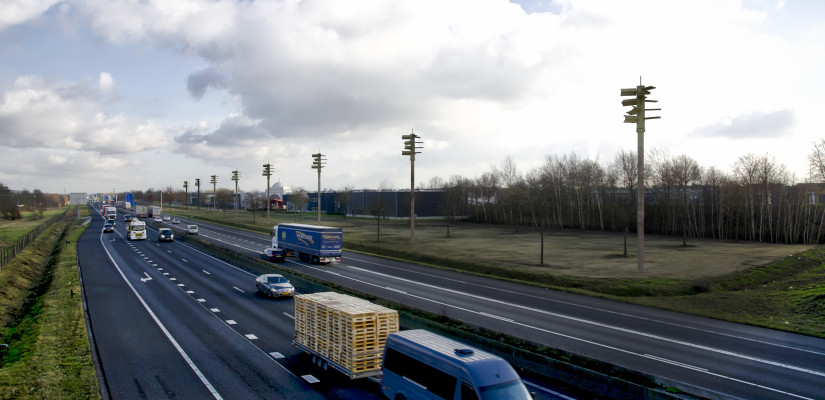
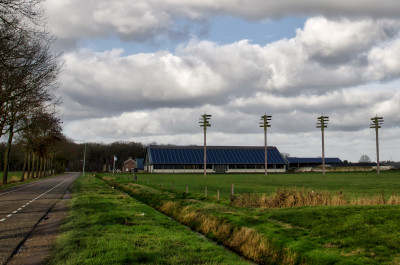
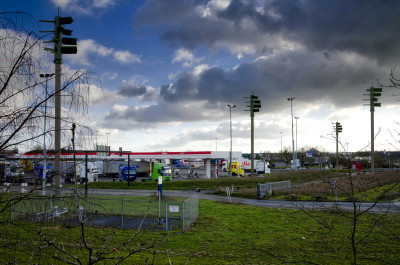
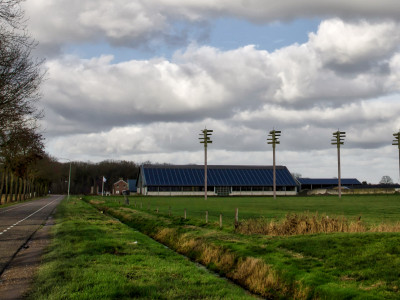
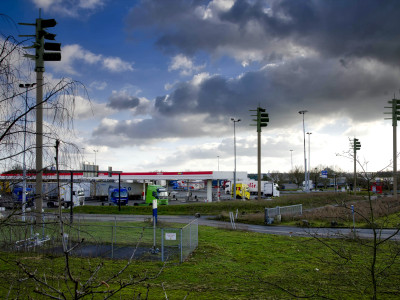
Torque Wind Turbine Towers alongside a Highway.